Why the 4Cs Alone Cannot Tell You If an Oval Diamond Is Truly Excellent
The GIA's 4Cs system (Carat, Colour, Clarity, Cut) sets the international standard for diamond quality assessment. But in the world of fancy cuts, the 4Cs are not the whole story. For oval diamonds in particular, there is one critical visual indicator that no 4C certificate will explicitly tell you about: the Bow-Tie effect.
This phenomenon only appears in elongated cuts such as oval, marquise, pear, and emerald. Ignoring it can lead you to a diamond that looks flawless on paper but appears dull in real life. This article decodes what causes the Bow-Tie, how to read it, and how to avoid stones with severe ones. Begin with the diamond 4Cs explained guide for the foundational framework.
What Is the Bow-Tie Effect?
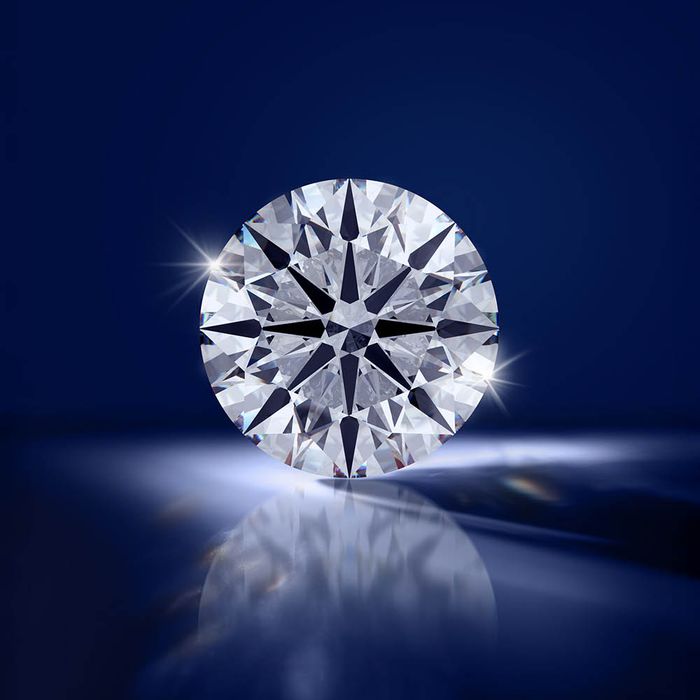
A Bow-Tie is a dark band that crosses the centre of an oval diamond when viewed face-up, shaped like its namesake. When the diamond is positioned face-up, light enters from the observer's direction, but parts of the body (head, camera) block some incoming light. This causes the central facets to fail to reflect sufficient light back, creating the shadow.
Almost all oval diamonds carry some degree of Bow-Tie. The differences lie in depth, symmetry, and spread. A subtle Bow-Tie is normal, but a heavy or wide one will severely undermine overall brilliance. Read the diamond certification institutions guide to understand how (and how not) certificates reflect this trait.
Why Doesn't a GIA Certificate Note the Bow-Tie?
A common question: if Bow-Tie matters this much, why isn't there a dedicated field on the GIA certificate? The answer is that Bow-Tie is a visual phenomenon, not easily quantified by a single metric. GIA's Cut grade indirectly reflects it, but for oval diamonds, GIA does not yet issue an official Cut grade (only round brilliants receive a complete Cut Grade).
In other words, the overall cut quality of an oval depends on a gemmologist's direct visual assessment of the Bow-Tie and overall proportions. The diamond types classification guide explains the grading differences between fancy cuts and round brilliants.
This is why on-site inspection matters more than certificate numbers when buying an oval. Two D-VVS1 ovals can present radically different Bow-Tie levels. The carat element guide covers how carat trades off against cut considerations.
Three Levels of Bow-Tie: Acceptable, Caution, Avoid
When ALUXE gemmologists evaluate ovals, they classify Bow-Tie into three tiers.
Mild (acceptable): A light grey shadow only visible at certain angles, with no impact on overall brilliance during daily wear. These stones are safe to purchase.
Moderate (proceed with caution): A more visible but not pitch-black shadow covering 20 to 30 percent of the central area. Suitable for stronger ambient light, but worth reconsidering if mostly worn indoors.
Severe (avoid): A deep black shadow that breaks the overall scintillation, covering more than 30 percent. Even with high 4C grades, the visual impact is sharply diminished. Read 30,000 in-stock diamonds at ALUXE to understand how ALUXE filters out problematic stones.
Cut Parameters That Predict Bow-Tie Severity
If you want to predict Bow-Tie severity from technical data, focus on three parameters.
Depth percentage: Ideal range 58 to 64 percent. Too deep amplifies the Bow-Tie; too shallow flattens the stone's depth.
Table percentage: Ideal range 53 to 63 percent. A table that is too wide can intensify the central shadow.
Length-to-width ratio: Stones between 1.35:1 and 1.50:1 typically have controllable Bow-Tie. Overly elongated ovals (above 1.55:1) tend to show more severe shadowing. Read the best diamond shape guide for cut parameters across shapes.
How to Judge Bow-Tie at the Boutique
Three simple steps when assessing an oval at a boutique:
Step 1: Lay the stone face-up on white paper under natural light. Check the centre area for a noticeable shadow.
Step 2: Pick up the stone with tweezers and observe from different angles (30, 45, 60 degrees). A mild Bow-Tie should largely disappear at most viewing angles.
Step 3: Set the stone in a ring and try it on, simulating real wear. Observe brilliance under counter lights, natural daylight, and phone screen light. The love in the ring guide shares more refined inspection techniques.
Which Brands Pre-Filter Bow-Tie Effectively?
Not every retailer rigorously filters Bow-Tie before stocking. Larger, established brands typically maintain internal standards that exclude ovals with severe shadowing.
ALUXE's procurement process involves on-site GIA gemmologist inspection of each oval's Bow-Tie level, admitting only stones within the mild and moderate-acceptable range. Read top 3 engagement rings she'll say yes to for ALUXE's selection rigour.
If your budget allows, the Ultimate Diamond series applies even stricter brilliance filtering, keeping Bow-Tie at minimal levels.
Your Next Step: Compare Brilliance In Person
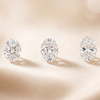
Theory has limits. Visit an ALUXE boutique and ask a gemmologist to lay out 3 to 5 ovals of similar grade side by side. The Bow-Tie's impact on brilliance becomes immediately visible. The perfect engagement ring guide helps you build a complete selection workflow.
If you are still weighing whether to choose an oval, compare with natural vs lab-grown diamonds and Hollywood star wedding rings to explore alternatives, or browse the meaning behind engagement ring styles for designs that suit your aesthetic.
Begin Your Brilliant Journey
Want to dive deeper into oval diamonds and other fancy cuts? Explore the GIA diamond knowledge centre to sharpen your selection skills, or browse the engagement ring collection for your destined style. Ready to see oval brilliance in person? Book a boutique consultation and let our specialists tailor recommendations to you.
References
Editor's Note
Writing this piece, I want to share one simple idea: the oval is a diamond that demands in-person selection. It is more than a numbers game; it is also a visual art. Standing at the counter with three ovals laid out side by side, you will see far beyond brilliance differences. You will see how diamonds with identical 4Cs can carry entirely different personalities. That is what ovals teach us: ultimately, choosing a diamond is choosing a visual experience that moves you.
FAQ
讓你們的故事,也擁有專屬的光芒
ALUXE 陪伴過無數新人記錄他們的愛情故事。我們相信,每一段感情都值得被用心對待,也值得一枚能代表你們的戒指。 無論你們的故事是浪漫、低調、冒險或充滿驚喜,我們都能為你們找到最合適的象徵。