Buying Your First Diamond Ring: The Golden Budget Ratio from SGD$1,500 to SGD$15,000
You have decided to propose. The savings are more or less in place. Then you open your phone, search for ring recommendations, and three minutes later you feel more lost than when you started.
One source insists on half a carat. Another says VS2 clarity is plenty. A third tells you platinum is the only sensible metal. Every claim sounds reasonable on its own, and nobody mentions whether all of them together will blow your budget.
The real problem is simpler than it looks. Most first-time buyers know how much they can spend. Very few know how to divide it.
Where does the money actually go?
The price of a diamond ring breaks into three parts.
The first is the centre stone. This is the only component that jumps sharply in price as you climb the quality ladder, and it takes the largest share. At the same 0.3 carat weight, moving colour from I to F and clarity from SI1 to VVS1 can more than double the cost. Before you compare quotes, it helps to understand how the 4Cs are graded.
The second is the setting. Metal choice, the complexity of the mounting and whether side stones are involved all shape this figure. Couples often hesitate over the difference between platinum and white gold, and the price gap between karat weights is worth understanding early.
The third is extras. Engraving, the presentation box, future cleaning and resizing, plus something many buyers overlook entirely: a grading report from a laboratory people actually trust.
Most people pour their attention into the first block and quietly ignore the other two. The result is either an overrun budget, or a beautiful stone sitting in a setting that cannot carry it.
The golden ratio: remember 7:2:1
If you take away one thing from this article, take these three numbers.
- Centre stone 70%
- Setting 20%
- Extras 10%
Why does the stone deserve seven parts in ten? Because it is the only element of the ring that cannot be reworked, upgraded or replaced later. A setting can be changed in five years. The diamond cannot.
The ratio works best in the middle and upper tiers. Below roughly SGD$1,500, the fixed costs of a setting refuse to shrink proportionally, so the split naturally drifts towards 6:3:1. That shift is normal and there is no sense forcing it back.
Think of it like buying a camera. The lens is your stone, the body is your setting. Most people eventually upgrade the body. Almost nobody parts with the lens.
SGD$1,500: concentrate on what the eye actually sees
Can SGD$1,500 buy a ring you feel proud to present? Yes, provided you are willing to make choices.
Suggested allocation
- Centre stone: from 0.30 carat, D to F colour (ALUXE stocks only D–F, the top three colour grades on the GIA scale), VS2 to SI1 clarity, Excellent cut
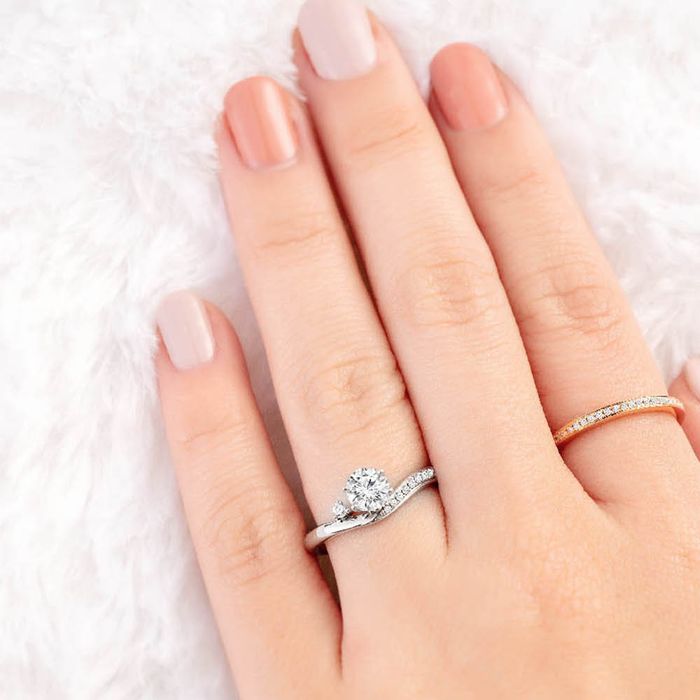
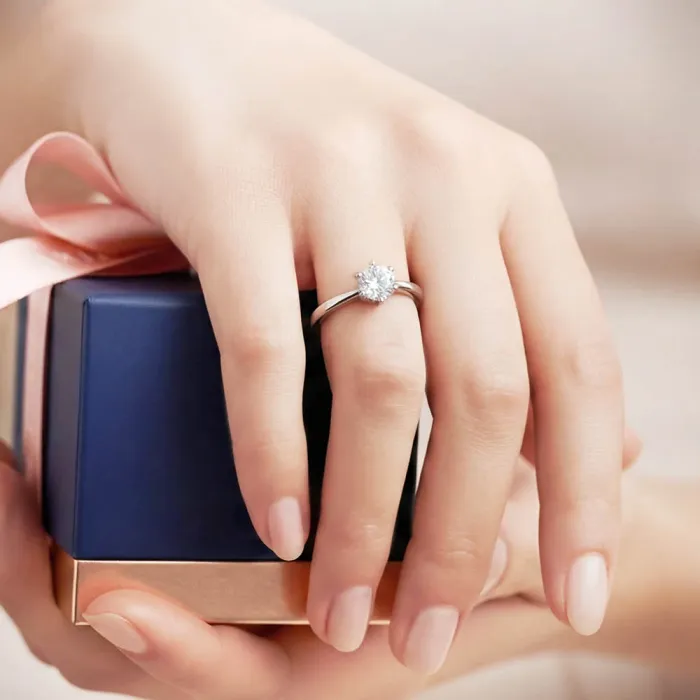
- Setting: 18K gold, four or six prong solitaire, no pavé
- Extras: GIA or equivalent report, basic engraving
The guiding principle here is cut first. Dropping one grade in colour or clarity is nearly invisible at arm's length. Dropping one grade in cut is immediately visible. An SI1 inclusion disappears at normal viewing distance, whilst a mediocre cut looks flat under restaurant lighting no matter what the paperwork says.
Choose a plain band over a pavé one. Small accent stones absorb labour cost without making the centre stone look larger. The same logic applies when you match a ring style to her hand shape, where suitability matters far more than complexity.
If SGD$1,500 still feels tight at this stage, an engagement ring rental service is an honest option, and redirecting the budget towards your wedding bands is a perfectly defensible choice.
SGD$2,500 to SGD$4,000: the tier where you gain options
Cross SGD$2,500 and the field opens up considerably.
Suggested allocation
- Centre stone: 0.30 to 0.40 carat, G to H colour, VS2 clarity, triple Excellent
- Setting: 18K gold or platinum, simple sculpted profile acceptable
- Extras: report, engraving, upgraded presentation box
The single best investment in this tier is triple Excellent, meaning Excellent ratings for cut, polish and symmetry together. Those three words are your guarantee of brilliance, and the premium usually sits around ten percent for a return you can see across a room.
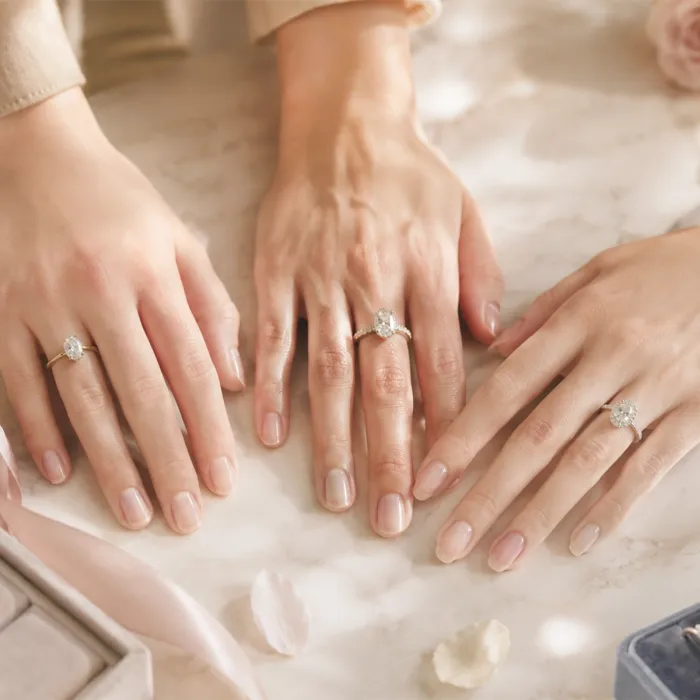
Shape is the other lever people forget. At identical weight, oval and marquise stones present a larger face-up area than a round brilliant, and they typically cost less. Spending ten minutes on the eight classic diamond shapes may be the most profitable reading in this entire guide.
Hoping to stretch the carat weight further? The trade-offs between natural and lab-grown diamonds have become a genuine conversation in Singapore over the past few years, and both positions have merit worth discussing together.
SGD$5,000 to SGD$8,000: the half-carat threshold
Half a carat carries a psychological weight in Singapore that has little to do with gemmology. For many couples it reads as the point where things became serious.
Suggested allocation
- Centre stone: 0.50 carat, G to H colour, VS1 to VS2 clarity, triple Excellent
- Setting: platinum or 18K gold, modest side stones acceptable
- Extras: report, engraving, aftercare plan
Here is a detail worth knowing. A 0.50 carat and a 0.47 carat stone look identical to the naked eye, yet the price difference can reach fifteen percent. If you are not attached to the number printed on the certificate, choosing a 0.45 to 0.49 carat stone buys you better quality for the same outlay. What a one-carat diamond really costs in Singapore follows exactly the same pattern at the next threshold up.
Once you reach this tier, the credibility of the grading report stops being negotiable. The differences between GIA, IGI and other laboratories determine what that piece of paper is worth, and what premium your ring holds if you ever choose to upgrade.
One practical note: the size of a boutique's loose stone inventory directly affects your negotiating room. When you can select from thirty thousand stones held in stock, you have a real chance of finding identical specifications at a friendlier price.
SGD$10,000 to SGD$15,000: chase carat, or chase craft?
At this level two roads open in front of you.
Route A: chase carat 0.70 to 1.00 carat, G to H colour, VS2, triple Excellent, on a clean solitaire setting. Suited to a partner who values immediate visual impact.
Route B: chase craft A 0.50 to 0.60 carat stone of higher specification, paired with a bespoke setting or intricate mounting. Suited to someone with a defined personal style who will wear the ring daily.
There is no correct answer, only the one that resembles her more closely. If her wardrobe leans minimal and her hands are slender, the finish of Route B may move her more. If she has been waiting for that audible gasp, Route A delivers it faster.
For anyone drawn to Route B, it is worth seeing how far ring customisation can actually go. From the curve of the band to the engraving inside it, bespoke work earns its price by preserving details only the two of you understand.
Four ways couples misallocate the budget
One, paying for clarity nobody can see. VVS1 and VS2 are indistinguishable without magnification, and the price gap is substantial. Unless you are buying for long-term collection, VS2 is the sweet spot.
Two, merging the proposal ring and the wedding bands into a single sum. These are two purchases at two different moments. Clarifying how engagement rings and wedding bands divide the work usually relieves a surprising amount of pressure.
Three, treating ring size as an afterthought. A wrong size is more than an inconvenience, since some mountings allow very little resizing and occasionally need remaking. Learning how to measure her ring size discreetly costs almost nothing and prevents the most trouble.
Four, leaving nothing for aftercare. A ring worn for decades needs cleaning, polishing and prong checks. Confirming what aftercare a brand actually provides before you pay is far cheaper than discovering the fees afterwards.
Three questions to ask before you buy
Does she wear rings at the moment? Someone with no habit of wearing jewellery will find a tall prong setting catches on fabric constantly. Shifting a little budget towards comfort beats chasing carat weight.
When is the wedding? If your solemnisation falls within six months, reserve budget for wedding bands or an eternity ring now. Singapore couples juggling a BTO flat, renovation and banquet deposits rarely enjoy surprises in the final quarter of planning.
How long will she wear this ring? If the answer is a lifetime, then the practicalities of daily care belong in your calculation. Fully pavé designs are lovely and demand more upkeep, which is worth weighing before you tap your card.
It is also worth mapping the ring against the wider sequence of customs. Families observing the Si Dian Jin tradition will have separate gold obligations to plan for, and knowing that early keeps the ring budget honest.
Prices move and specifications vary between suppliers. The figures above represent common market ranges in Singapore, and any final quotation should reflect current diamond pricing and the specification in front of you.
Begin Your Brilliant Journey
A budget is never only a number. It is the seriousness of your intent, translated into a plan you can act on. To build your foundations first, the GIA diamond knowledge hub is the fastest route in. If the picture in your head is already forming, browse the engagement ring collection and notice which piece makes you pause a second longer.
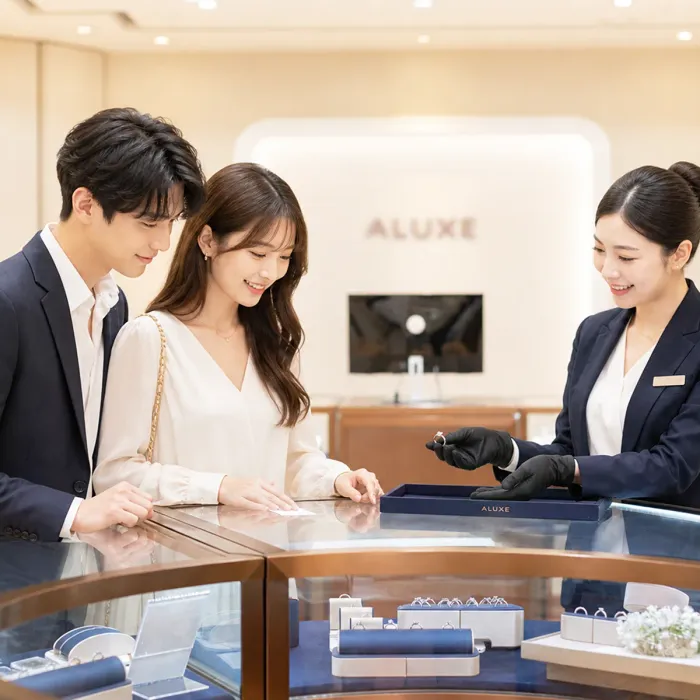
Nothing replaces seeing a stone in person. Book a boutique appointment, tell your consultant the exact figure you have in mind, and let expertise place every dollar where it will matter most.
Editor's Note
After enough years in this trade, you notice a pattern. Couples who sacrifice cut quality to reach half a carat leave the boutique delighted. Three months later, at their first cleaning appointment, many of them ask the same quiet question about why someone else's ring sparkles more.
Budget allocation exists to protect the decisions you cannot revisit later. A good ring is possible at almost any price. The difference lies entirely in whether you put the money where it cannot be corrected afterwards.
References
FAQ
Turn This Occasion Into a Memory That Lasts Forever
Whether it’s a birthday, anniversary or just a “thank you for being here” moment, our stylists will help you choose jewellery she’ll treasure for years.Not sure what she’ll like? Share a few photos and her style with us – we’ll prepare curated pieces for you to see and try in store.